
Kunsthistorisches Museum
The Habsburgs’ art museum on Maria-Theresien-Platz, with the largest collection of Bruegel’s paintings in the world.
Photo: Manfred Werner (Tsui), CC BY-SA 3.0, via Wikimedia Commons
Emperor Franz Joseph had Gottfried Semper and Karl von Hasenauer build the museum for the Habsburg collections, and it opened in 1891. It faces its twin, the Natural History Museum, across Maria-Theresien-Platz, with the monument to Empress Maria Theresa in between.
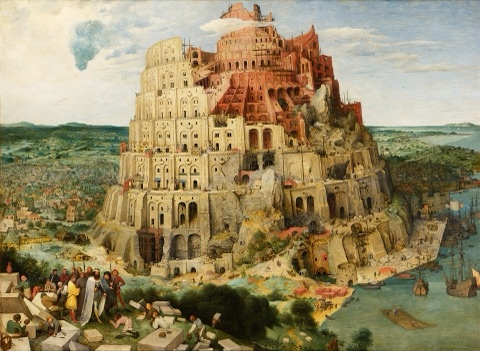
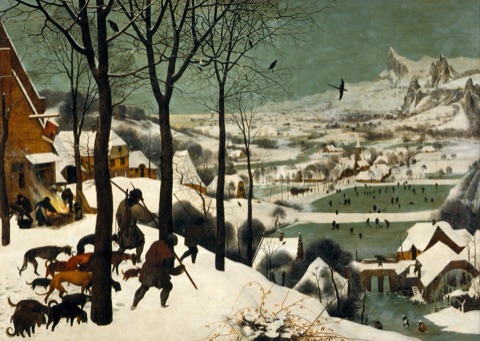
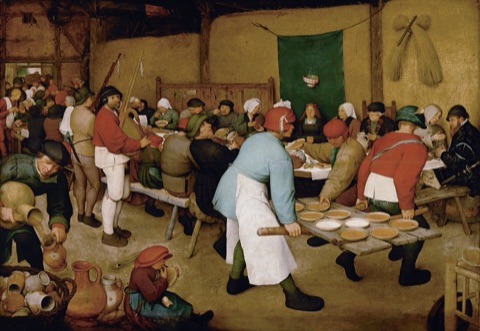
Its Bruegel room holds the Hunters in the Snow, the Tower of Babel and the Peasant Wedding, the largest collection of Pieter Bruegel the Elder’s paintings in the world. In Instant Vienna you can walk into three of its rooms. Visit it in 3D ›
Famous art here

More in Vienna
 St Stephen’s CathedralVienna’s Gothic cathedral, with its 136-metre south tower and a roof of glazed tiles in zigzags.
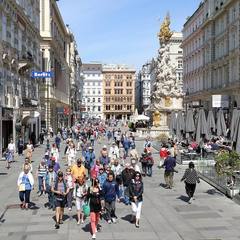 GrabenVienna’s grand shopping street on the line of the Roman ditch, with the Plague Column in the middle.
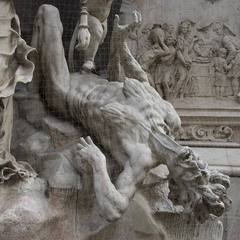 Plague ColumnThe Baroque column of clouds and angels put up after the plague of 1679.
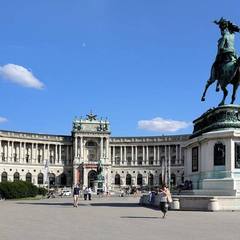 HofburgThe Habsburgs’ winter palace for six centuries, now the seat of Austria’s president.
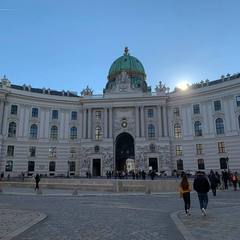 MichaelerplatzThe round square at the Hofburg’s gate, where Roman ruins and Adolf Loos’ plain house face the palace.
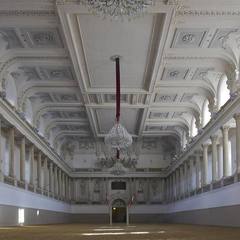 Spanish Riding SchoolThe white Lipizzaner stallions dance in a Baroque riding hall inside the Hofburg.
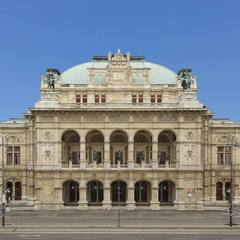 State OperaOpened in 1869, the first great building on the Ringstraße and one of the world’s great opera houses.
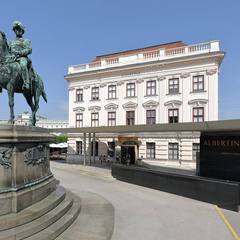 AlbertinaA Habsburg palace with one of the world’s largest collections of prints and drawings, Dürer’s Hare among them.
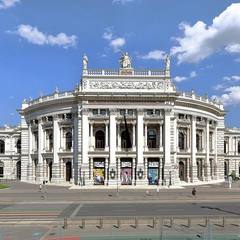 BurgtheaterOne of the most important German-language theatres, on the Ringstraße, opposite the town hall.
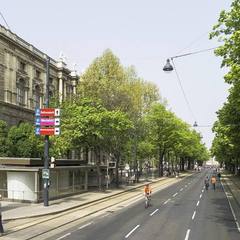 RingstraßeThe grand boulevard round the old town, built where the city walls stood.
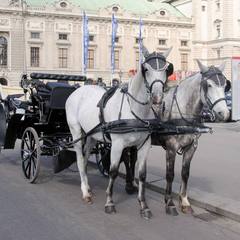 FiakerThe two-horse carriages that wait on Stephansplatz to drive you round the old town.
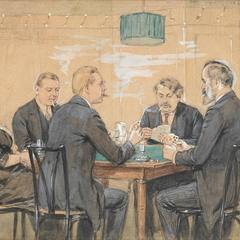 Coffee housesMarble tables, newspapers on wooden holders and a glass of water with every coffee.
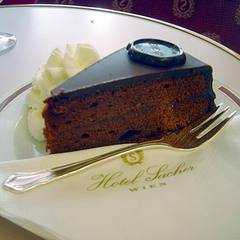 SachertorteA rich chocolate cake with apricot jam, invented by Franz Sacher in 1832.