
Salerno › Places and landmarks
Sfogliatella
The shell of crisp layered pastry filled with ricotta and semolina, born in a convent on the Amalfi Coast.
Photo: stu_spivack, CC BY-SA 2.0, via Wikimedia Commons

The sfogliatella is a shell of thin, crisp layers of pastry, filled with ricotta, semolina and candied orange peel. Its ancestor, the Santa Rosa, was first made in the 17th century by the nuns of the convent of Santa Rosa in Conca dei Marini, on the Amalfi Coast just west of Salerno.
You eat it warm, with an espresso, in any café on the Corso. Ride through Salerno in 3D ›
More in Salerno
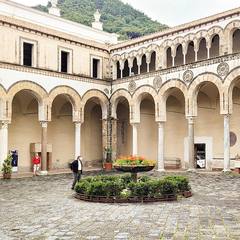 Duomo di San MatteoThe Norman cathedral over the tomb of Saint Matthew the Evangelist, with an arcaded courtyard and a bell tower of the 12th century.
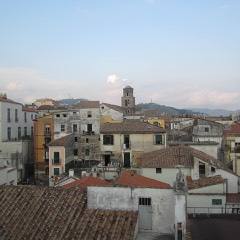 Via dei MercantiThe merchants’ street of the medieval town, a narrow lane of shops across the whole centro storico.
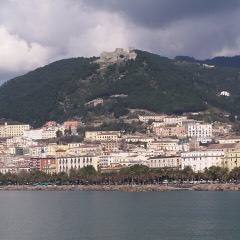 Lungomare TriesteThe seafront promenade under the palms, with the Gulf of Salerno in front and the Amalfi Coast on the horizon.
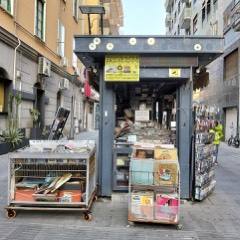 Corso Vittorio EmanueleSalerno’s long shopping street, closed to cars, from the old town to the station.
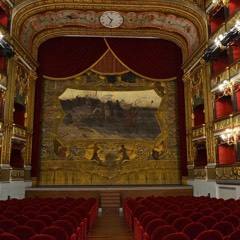 Teatro VerdiThe town’s opera house of 1872, a small copy of the San Carlo in Naples, red and gold inside.
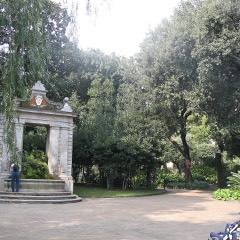 Villa ComunaleThe town’s 19th-century garden, shady and green, between the Teatro Verdi and the sea.
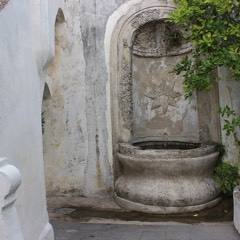 Giardino della MinervaA garden of medicinal plants on terraces above the old town, among the oldest botanical gardens in Europe.
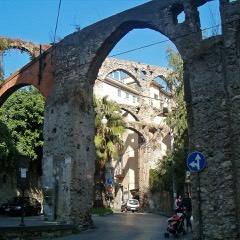 Medieval aqueductThe tall arches of the medieval aqueduct, which legend says the devil built in a single night.
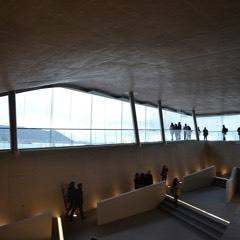 Stazione MarittimaZaha Hadid’s ferry terminal on the Molo Manfredi, where the boats leave for Amalfi, Positano and Capri.
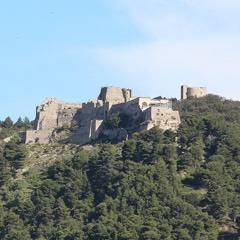 Castello di ArechiThe castle on the hill above the town, strengthened by the Lombard prince Arechis II, with the whole gulf at its feet.
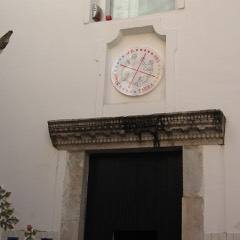 Scuola Medica SalernitanaThe first medical school of medieval Europe, where women taught and practised medicine too.
Luci d’ArtistaEvery winter artists light up the streets, squares and gardens of Salerno with huge installations of light.