
Eiffel Tower
Tour Eiffel
Gustave Eiffel’s iron tower on the Champ de Mars, built for the World’s Fair of 1889 and the symbol of Paris ever since.
Photo: David McSpadden (Flickr), CC BY 2.0, via Wikimedia Commons

Gustave Eiffel’s company built the tower in two years for the World’s Fair of 1889, the centenary of the Revolution: 18,000 pieces of puddled iron held together by two and a half million rivets. At 300 metres it was the tallest structure in the world for forty years.
Many artists signed a protest against the “useless and monstrous” tower, and it was only meant to stand for twenty years. It was saved by its radio antennas and became the symbol of the city. You can climb to the first and second floors, or take the lifts to the top at 276 metres. Visit it in 3D ›
More in Paris
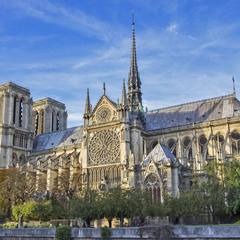 Notre-DameThe Gothic cathedral on the Île de la Cité, begun in 1163 and open again since the fire of 2019.
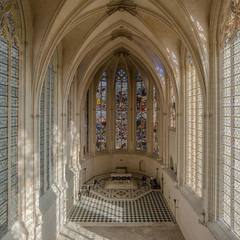 Sainte-ChapelleLouis IX’s royal chapel of 1248, its walls almost all stained glass.
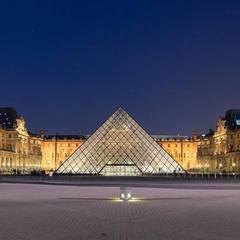 LouvreA royal palace turned into the world’s most visited museum, with the glass pyramid in its courtyard.
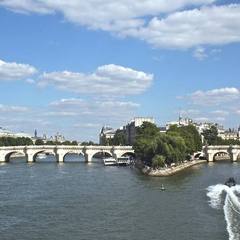 Pont NeufThe “new bridge”, which is in fact the oldest bridge still standing across the Seine in Paris.
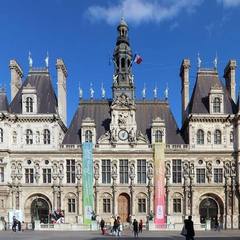 Hôtel de VilleThe city hall of Paris, on this spot since 1357 and rebuilt after the Commune burned it in 1871.
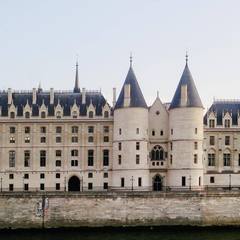 ConciergerieA medieval royal palace on the island, later the prison where Marie-Antoinette awaited the guillotine.
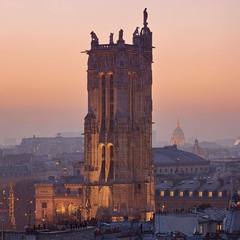 Tour Saint-JacquesA lone Gothic bell tower, all that remains of a church on the pilgrims’ road to Santiago.
Centre PompidouThe museum of modern art with its pipes, ducts and escalators on the outside, opened in 1977.
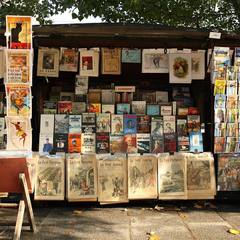 BouquinistesThe green boxes of second-hand booksellers along the quays of the Seine.
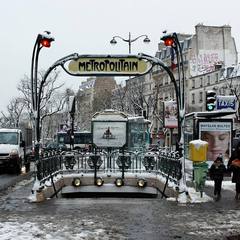 Métro entrancesThe green Art Nouveau entrances of the Paris Métro, drawn by Hector Guimard around 1900.
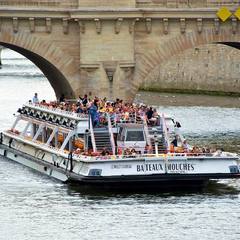 Bateaux-mouchesThe sightseeing boats that glide up and down the Seine, past Notre-Dame and under the bridges.
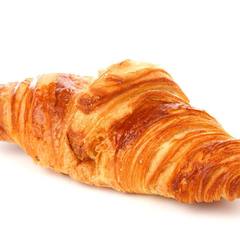 CroissantThe flaky, buttery crescent of a Paris breakfast, from the boulangerie on every corner.