
Istanbul › Places and landmarks
Hagia Sophia
Ayasofya
Justinian’s great church of 537, with its dome 55 metres high: a church, then a mosque, a museum and a mosque again.
Photo: Maksym Kozlenko, CC BY-SA 4.0, via Wikimedia Commons

Emperor Justinian had the Hagia Sophia, the church of Holy Wisdom, built in under six years, and it was finished in 537. Its dome, 31 metres across and 55 metres above the floor, seems to float on a ring of forty windows. For almost a thousand years it was the largest church in the world and the heart of the Byzantine Empire.
When Mehmed II took the city in 1453, he made it a mosque, and the four minarets were added round it. In 1934 Atatürk’s republic made it a museum, and in 2020 it became a mosque again. Visitors may still go in outside the hours of prayer, to see the mosaics of Christ and the emperors next to the great round shields with the names of God and the Prophet. Visit it in 3D ›
More in Istanbul
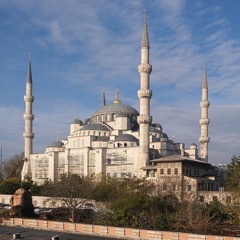 Blue MosqueThe mosque of Sultan Ahmed I, with six minarets and some twenty thousand blue tiles from İznik inside.
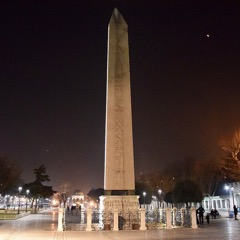 HippodromeThe long square where Byzantium held its chariot races, with an Egyptian obelisk and a bronze serpent column still on it.
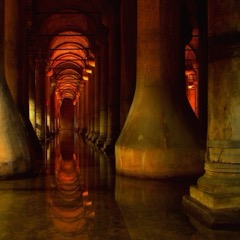 Basilica CisternThe underground water store of Justinian, a forest of 336 columns standing in the water.
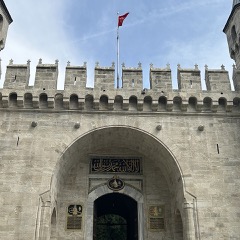 Topkapı PalaceThe palace of the Ottoman sultans for almost four hundred years, on the tip of the peninsula above the Bosphorus.
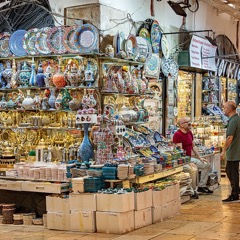 Grand BazaarOne of the oldest and largest covered markets in the world, some sixty streets and four thousand shops under one roof.
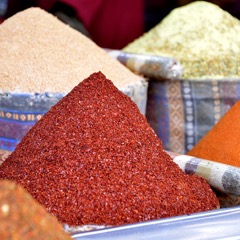 Spice BazaarThe L-shaped covered market by the New Mosque, full of spices, dried fruit, tea and Turkish delight.
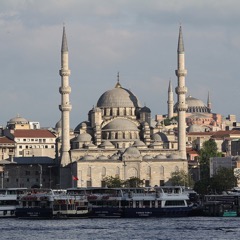 New MosqueThe great mosque on the water at Eminönü, begun in 1597 and finished 68 years later.
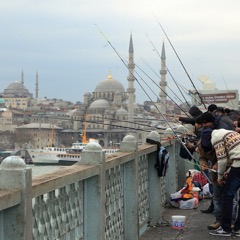 Galata BridgeThe bridge over the Golden Horn from Eminönü to Karaköy, lined with anglers on top and fish restaurants below.
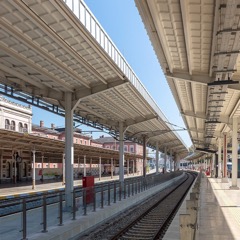 Sirkeci StationThe end of the line for the Orient Express from Paris, a station of 1890 by the sea.
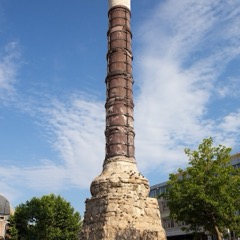 Column of ConstantineThe column Constantine the Great set up in 330 for the founding of his new capital, held together by iron hoops.
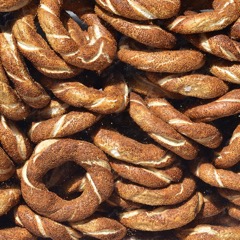 SimitThe sesame bread ring sold from red carts on every corner, eaten for breakfast with a glass of tea.
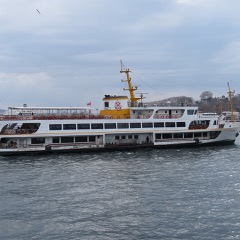 FerriesThe white ferries that carry Istanbul across the Bosphorus between Europe and Asia, from the quays of Eminönü.