
Delftse Donderslag
The gunpowder explosion of 12 October 1654, which flattened a quarter of the town.
Photo: Egbert van der Poel, Public domain, via Wikimedia Commons

On the morning of 12 October 1654 the town’s gunpowder store, with tonnes of powder in it, blew up. The blast was heard far beyond the town; it destroyed the whole north-east of Delft and killed more than a hundred people, among them the painter Carel Fabritius, Rembrandt’s pupil.
The quarter was never rebuilt as it was: where the store stood lies the Paardenmarkt, an open square, to this day. Visit it in 3D ›
More in Delft
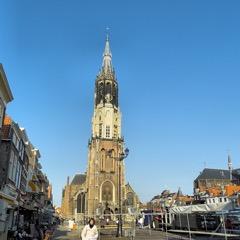 MarktThe long market square between the town hall and the Nieuwe Kerk, one of the largest in the Netherlands.
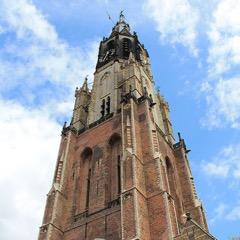 Nieuwe KerkThe great Gothic church on the Markt, with a tower of 108 metres, where the princes of Orange lie buried.
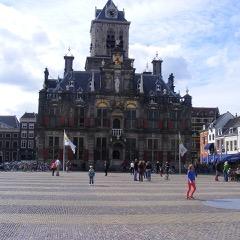 StadhuisDelft’s Renaissance town hall at the west end of the Markt, built round a medieval stone tower.
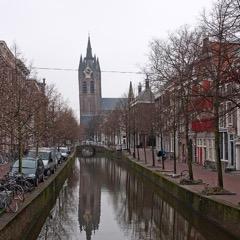 Oude KerkThe oldest church in Delft, on the Oude Delft, with a tower that leans about two metres over the canal.
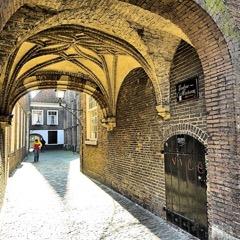 PrinsenhofThe old convent where William of Orange lived, and where he was shot in 1584. The bullet holes are still in the wall.
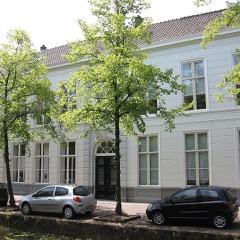 Oude DelftThe oldest canal of the town, which gave Delft its name, lined with merchants’ houses and the Gemeenlandshuis.
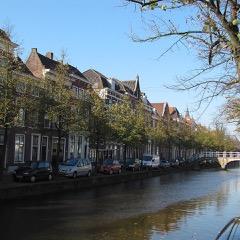 KoornmarktThe canal where the grain was traded, now lined with cafés, houseboats and terraces by the water.
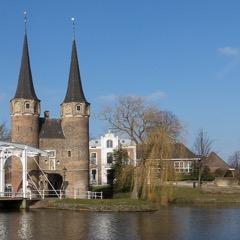 OostpoortThe last of Delft’s town gates, with two slim towers mirrored in the water.
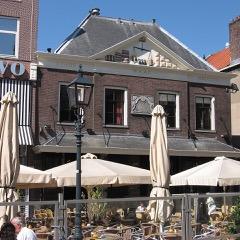 WaagThe weigh house by the Markt, where goods were weighed for the town’s taxes.
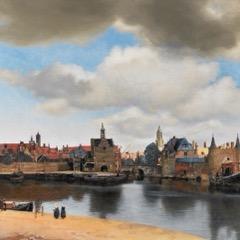 Johannes VermeerThe painter of the Girl with a Pearl Earring and the View of Delft, who was born, worked and buried in Delft.
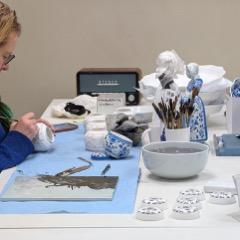 Delfts blauwThe blue and white pottery that made Delft famous, first made to stand in for Chinese porcelain.
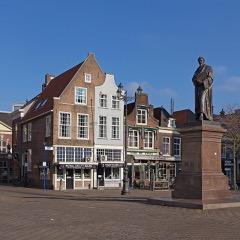 Hugo de GrootThe lawyer born in Delft who wrote the first great book on the law between nations, and escaped from prison in a book chest.