Art › London › The British Museum
The Rosetta Stone
The same decree in three scripts: the stone that let us read Egyptian hieroglyphs again.
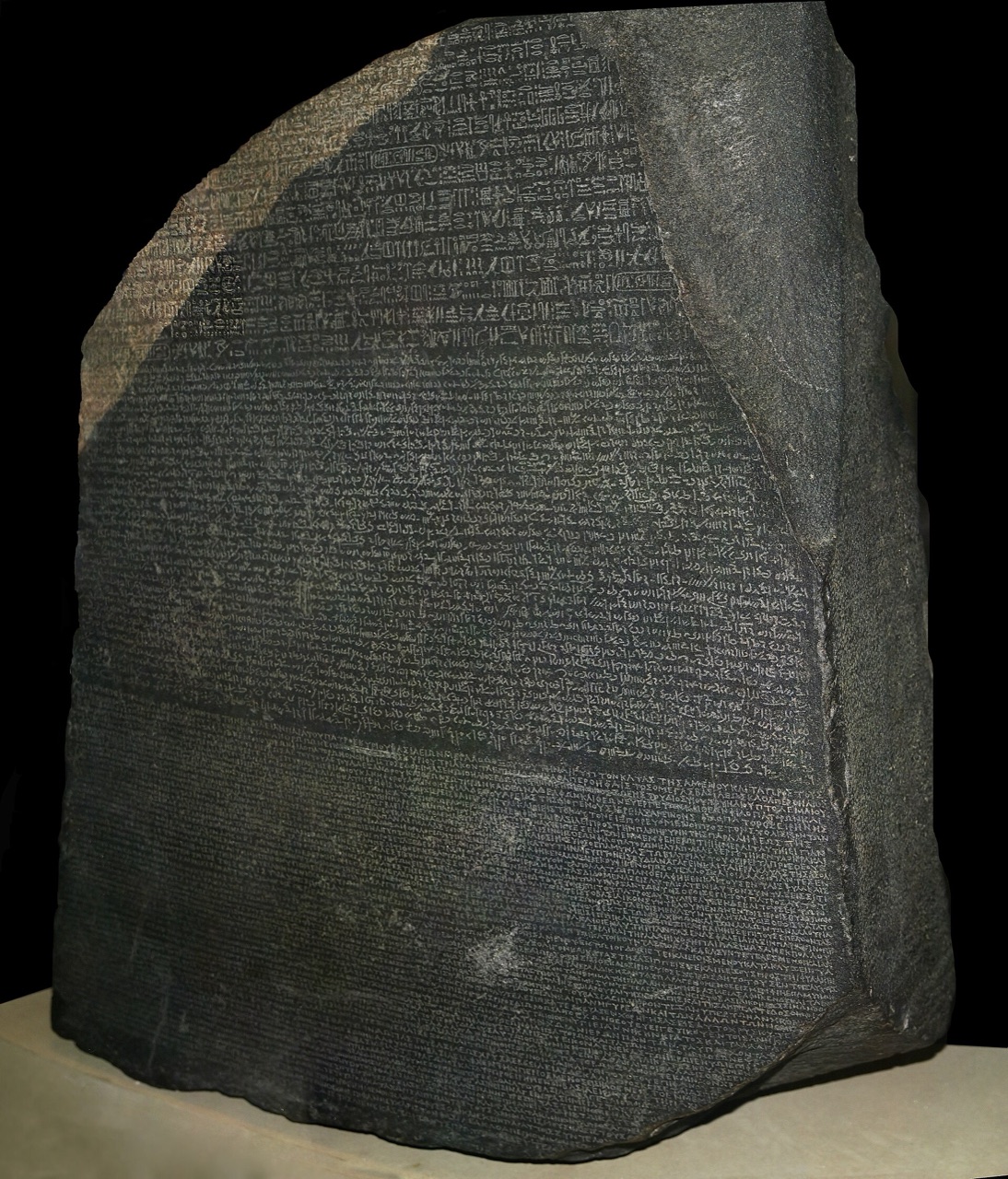
Priests meeting at Memphis in 196 BC issued a decree in honour of the young king Ptolemy V, and it was carved on stone three times: in hieroglyphs, in Demotic (the everyday Egyptian script) and in ancient Greek.
French soldiers found the broken slab in 1799 at Rashid, which Europeans called Rosetta, built into an old fort. The British took it under the treaty of 1801, and it has been in the British Museum since 1802. Because the Greek could be read, Thomas Young and then Jean-François Champollion worked out the hieroglyphs from it, Champollion announcing it in 1822. Stand before it in 3D ›