
Paris › Places and landmarks
Places and landmarks in Paris
13 landmarks of Paris, and the streets, squares and waterways around them, each with its story and where to find it.
Photo: Ali Sabbagh, CC0, via Wikimedia Commons

Landmarks
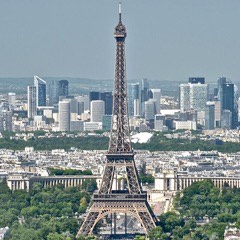 Eiffel TowerGustave Eiffel’s iron tower on the Champ de Mars, built for the World’s Fair of 1889 and the symbol of Paris ever since.
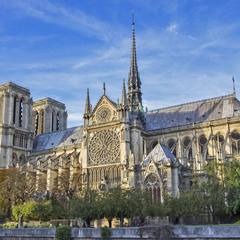 Notre-DameThe Gothic cathedral on the Île de la Cité, begun in 1163 and open again since the fire of 2019.
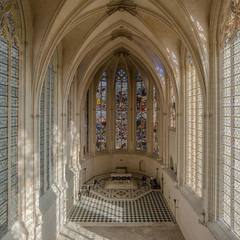 Sainte-ChapelleLouis IX’s royal chapel of 1248, its walls almost all stained glass.
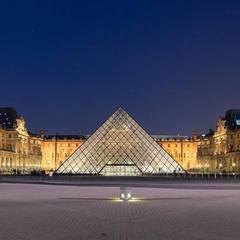 LouvreA royal palace turned into the world’s most visited museum, with the glass pyramid in its courtyard.
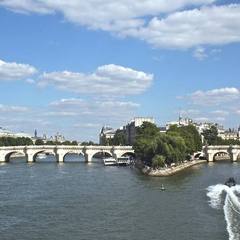 Pont NeufThe “new bridge”, which is in fact the oldest bridge still standing across the Seine in Paris.
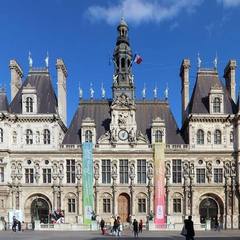 Hôtel de VilleThe city hall of Paris, on this spot since 1357 and rebuilt after the Commune burned it in 1871.
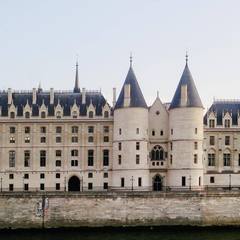 ConciergerieA medieval royal palace on the island, later the prison where Marie-Antoinette awaited the guillotine.
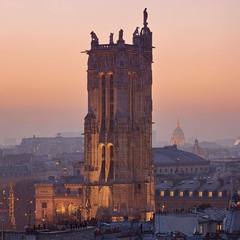 Tour Saint-JacquesA lone Gothic bell tower, all that remains of a church on the pilgrims’ road to Santiago.
Centre PompidouThe museum of modern art with its pipes, ducts and escalators on the outside, opened in 1977.
Also part of Paris
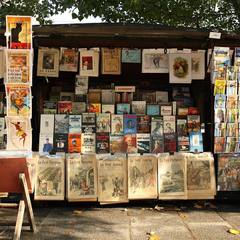 BouquinistesThe green boxes of second-hand booksellers along the quays of the Seine.
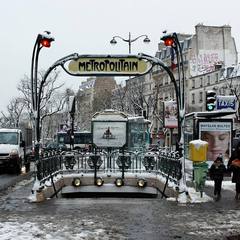 Métro entrancesThe green Art Nouveau entrances of the Paris Métro, drawn by Hector Guimard around 1900.
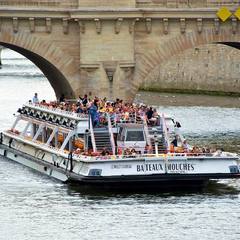 Bateaux-mouchesThe sightseeing boats that glide up and down the Seine, past Notre-Dame and under the bridges.
 CroissantThe flaky, buttery crescent of a Paris breakfast, from the boulangerie on every corner.
Streets, squares and waterways
The places that hold the centre of Paris together. Point at one to find it on the map.

-
1
The Seine La Seine waterway
Paris’s river, between stone quays where the booksellers, the bouquinistes, keep their green boxes. Its banks through the centre are a World Heritage site.
-
2
Île de la Cité quarter
The island in the Seine where Paris began, home to Notre-Dame, the Sainte-Chapelle and the law courts.
-
3
Pont Neuf bridge
Despite its name, the ‘New Bridge’ is the oldest bridge in Paris, finished in 1607 across the western tip of the island.
-
4
Place Dauphine square
A quiet triangle of houses and chestnut trees behind the Pont Neuf, laid out by Henry IV in 1607.
-
5
Parvis Notre-Dame square
The open square in front of the cathedral, where a bronze star in the paving marks the point from which French roads measure their distances to Paris.
-
6
Boulevard du Palais street
The street across the island past the Palais de Justice, whose courtyard hides the Sainte-Chapelle.
-
7
Place du Châtelet square
A square at the end of the Pont au Change, with a fountain and two theatres facing each other, and the Gothic Tour Saint-Jacques a few steps away.
-
8
Place de l’Hôtel de Ville square
The square in front of the city hall, which was called the Place de Grève until 1803 and for centuries served as the city’s place of execution.
-
9
Rue de Rivoli street
The long, straight street of the Right Bank, begun under Napoleon, with arcades along the Louvre and the Tuileries Garden.
-
10
Pont des Arts bridge
The metal footbridge from the Louvre to the Institut de France, with a view down the river to the tip of the island.
-
11
Boulevard de Sébastopol street
One of Haussmann’s first boulevards, cut straight north from the Châtelet in the 1850s.
-
12
Place Georges-Pompidou square
The sloping square in front of the Centre Pompidou, with its pipes and escalators on the outside.
-
13
Place Saint-Michel square
The square at the foot of the Boulevard Saint-Michel, with a fountain of the archangel fighting the devil, where the Latin Quarter begins.
-
14
Rue de la Huchette street
A narrow medieval lane of the Latin Quarter, full of Greek restaurants, with a small theatre that has played Ionesco’s The Bald Soprano since 1957.