
Brandenburg Gate
Brandenburger Tor
The neoclassical gate of 1791 crowned by the Quadriga, symbol of a divided and reunited Germany.
Photo: Thomas Wolf, www.foto-tw.de, CC BY-SA 3.0, via Wikimedia Commons

Carl Gotthard Langhans built the gate in 1791 as an entrance to Unter den Linden, modelled on the gateway of the Acropolis. On top a goddess of victory drives the Quadriga, a chariot of four horses; Napoleon took it to Paris in 1806, and it came back in 1814.
From 1961 the gate stood in the no man’s land of the Berlin Wall. On 22 December 1989 it opened again, and it became the symbol of a reunited Germany. Visit it in 3D ›
More in Berlin
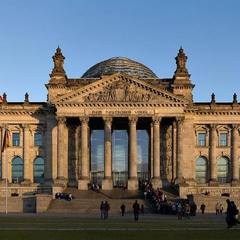 ReichstagThe parliament building of 1894, crowned since 1999 by a glass dome you can walk up.
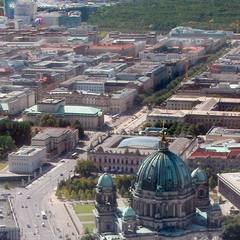 Unter den LindenThe boulevard under the lime trees, from the Brandenburg Gate to Museum Island.
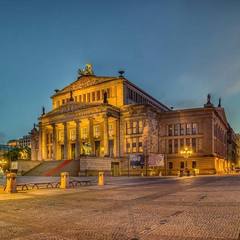 GendarmenmarktThe French and the German church facing each other across the square, with the concert hall between.
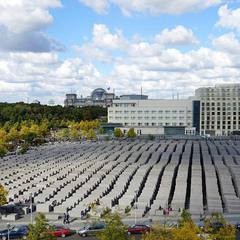 Holocaust MemorialThe Memorial to the Murdered Jews of Europe: 2,711 concrete slabs on a sloping field.
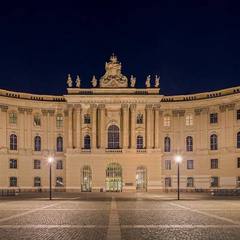 BebelplatzThe square where the Nazis burned books in 1933, now marked by a library of empty shelves under the ground.
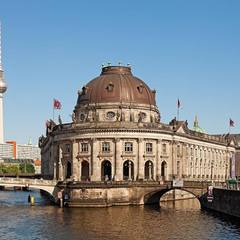 Museum IslandFive great museums on an island in the Spree, from the Pergamon Altar to Nefertiti.
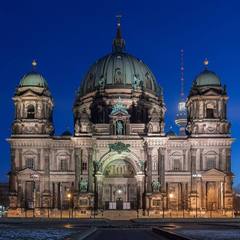 Berlin CathedralThe great domed Protestant cathedral on Museum Island, finished in 1905.
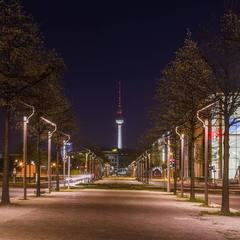 TV TowerEast Berlin’s 368-metre TV tower of 1969, with a ball that throws a cross of light in the sun.
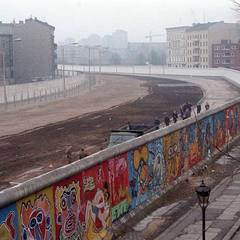 Berlin WallThe wall that split the city from 1961 to 1989, its line now marked by a double row of cobbles.
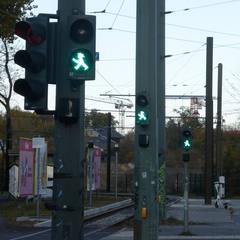 AmpelmännchenThe little man with a hat on East Berlin’s traffic lights, saved after reunification.
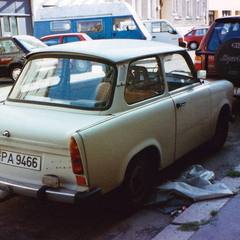 TrabantThe little East German car with a plastic body, which chugged across the open border in 1989.
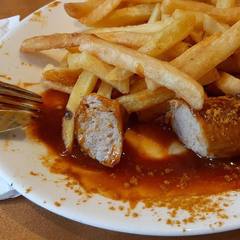 CurrywurstA sliced pork sausage in curried ketchup, invented in Berlin in 1949.