Instant Cities: Ghent

Ghent › Places and landmarks

St Michael’s Bridge

Sint-Michielsbrug

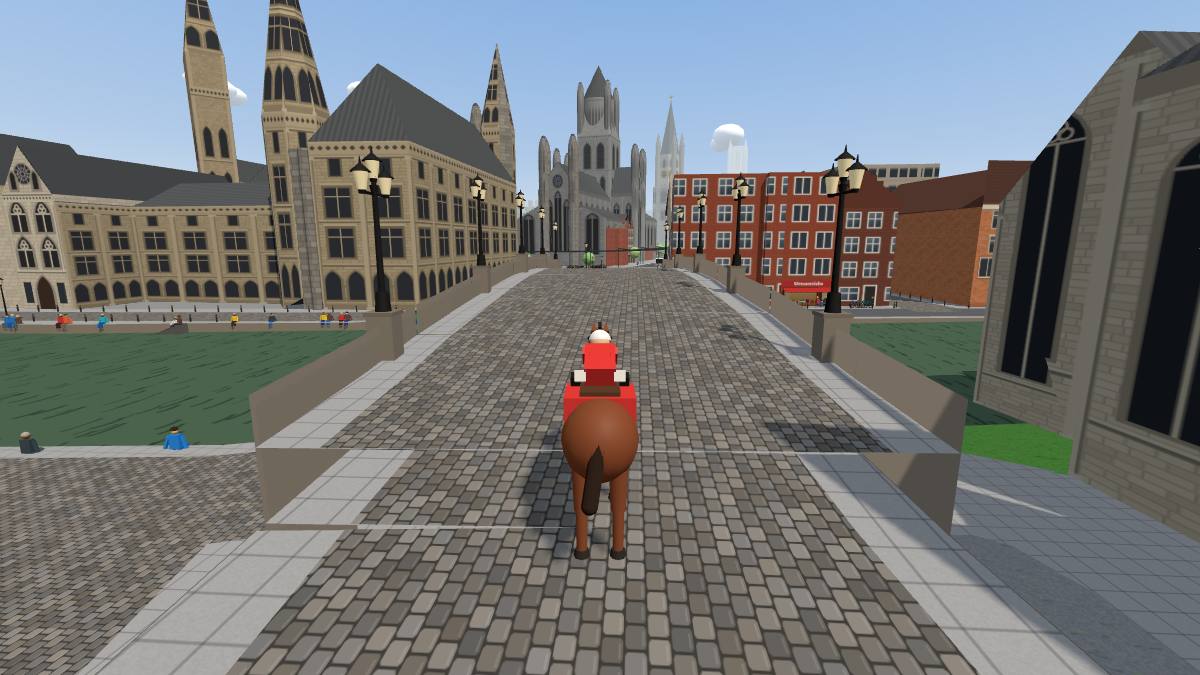
Built at the start of the 20th century, just before the 1913 World Fair. Look east to see Ghent’s three towers in a row: St Nicholas’, the Belfry and St Bavo’s. Behind you stands St Michael’s Church, whose tower was never finished.
See it in 3D Watch the tour

St Michael’s Bridge in Instant Ghent

St Michael’s Bridge is not a sight to look at so much as one to look from. From this stone arch over the Leie you get the finest view in Ghent. Look east and you see the city’s three towers in a neat row: first St Nicholas’ Church, then the Belfry with its dragon and behind it the tower of St Bavo’s Cathedral. Photographers and painters have stood here for more than a century.

Turn around and there is much more. Look north down the water, with the Graslei on the right and the Korenlei on the left, their guild houses mirrored in the Leie. In the distance the towers of the Gravensteen rise above the roofs. On the west side of the bridge stands St Michael’s Church, with its strikingly flat-topped tower, and on the east side the large neo-Gothic building of the old Post Office, now a hotel and shops.

The bridge itself is lovely in its simplicity: one broad arch in natural stone, with elegant lanterns and balustrades. In the evening, when the towers and the façades along the quays are lit, it is at its most romantic. No wonder it is called the romantic heart of Ghent, and that so many wedding photos are taken here.

History

There has been a bridge here since the Middle Ages, linking the old centre around the Korenmarkt with the quarter around St Michael’s Church across the Leie. It was a busy crossing, with the port on the Graslei and Korenlei right next to it.

The bridge you see now was built in the first years of the 20th century, in the run-up to the 1913 World’s Fair. Ghent wanted to show itself to the world as a medieval jewel, and the Graslei, the Gravensteen and the Belfry were all worked on in those years. The new bridge had to fit that picture, and be wide enough for modern traffic, trams included.

St Michael’s Church beside it is much older. Building of this Gothic church began in 1440 but dragged on for centuries through lack of money and the wars of religion. The tower was meant to be one of the tallest in the Low Countries but was never finished: hence its flat top. Inside hangs, among other things, a Crucifixion by Anthony van Dyck. The Post Office opposite was built between 1898 and 1909 in a rich mix of neo-Gothic and neo-Renaissance and, after a thorough conversion, found new life as a hotel and shopping centre.

Going to see it

The bridge is always open to everyone and is on the Korenmarkt, a few steps from the Graslei. Come at sunrise for the calm, or at sunset and after, when the lights come on. It is the perfect starting point for a walk along the quays.

You can usually walk into St Michael’s Church for free, though its opening hours are shorter than the cathedral’s and often only in the tourist season. Mind the trams and cyclists crossing the bridge when you stop for a photo.

More in Ghent

St Bavo’s CathedralBuilt from the 13th to the 16th century, with an 89 m tower. Inside hangs the Van Eyck brothers’ Adoration of the Mystic Lamb (1432), one of the most famous and most stolen paintings in the world. Its Just Judges panel, stolen in 1934, has never been found. BelfryThe town’s 91 m tower, begun in 1313. Ghent kept its charters of rights here, and watchmen looked out for fire and enemies. A gilded dragon keeps watch on top. With the Cloth Hall beside it, it is a UNESCO World Heritage Site. GravensteenThe castle of the Counts of Flanders, built in 1180 by Philip of Alsace. It later served as a court, a prison and even a cotton mill, and got its battlements back around 1900. In 1949 students occupied it, in protest against the price of beer going up. Graslei and KorenleiGhent’s medieval port, on both banks of the Leie. Boatmen unloaded grain here and the guilds built their houses along the quay. The Koornstapelhuis, the grey Romanesque grain store from around 1200, is one of the oldest houses in town. St Nicholas’ ChurchThe merchants’ church, from the 13th century, in blue-grey Tournai stone: Scheldt Gothic. Its tower sits right on the middle of the roof and doubled as a lookout, long before the Belfry stood. Today it also hosts concerts and exhibitions. City HallA city hall in two styles: ornate late Gothic on the Hoogpoort, sober Renaissance on the Botermarkt. Running out of money and the wars of religion kept halting the building work. The Pacification of Ghent, a peace between the Low Countries’ provinces, was signed here in 1576. VrijdagmarktThe square of markets, feasts and uprisings, where the Counts of Flanders were sworn in. In the middle Jacob van Artevelde, the brewer who led Ghent in 1338, points the way. Across the square stands Ons Huis, the big home of the socialist workers’ movement. Groot VleeshuisThe butchers’ covered meat hall, built from 1406 to 1419. Hams still hang drying under its impressive wooden roof. Today you can buy and taste East Flemish regional produce here. Graffiti StreetThe Werregarenstraatje: since the 1990s anyone may spray paint here, legally. The walls get a fresh layer of paint almost every week, so no two visits look the same. KouterGhent’s smartest square, once a field and a place for parades and archers’ feasts. There has been a flower market here every Sunday since the 18th century, with a brass band in the bandstand. The blue kiosk serves a drink to go with it. VooruitThe party hall of the socialist co-operative Vooruit, opened in 1914: workers came here to dance, for theatre and concerts, and to eat in the café. Artists rescued it from decay in the 1980s. Today it is the arts centre VIERNULVIER. St Peter’s AbbeyThe abbey on the Blandijnberg hill was founded in the 7th century, by Saint Amand as the story goes, and grew into one of the richest in Flanders. The baroque church with its dome (1629-1720) is by Pieter Huyssens. The French dissolved the abbey in 1796; today it is an exhibition hall, with an abbey garden of vines and ruins behind its walls. Gent ZuidUntil 1928 the Zuidstation, Ghent’s first railway station, stood here. Today it is De Lijn’s hub: most city buses start and end here, and the trams pass on their way to the centre and Sint-Pieters. BlaarmeersenGhent’s sports and leisure park, by the Watersportbaan. On hot days the beach on the swimming lake is packed, and joggers run their laps round the 2.3 km rowing course. There is also a campsite, an athletics track and beach volleyball. MammelokkerLook above the door of this little house against the Cloth Hall: a young woman giving an old man her breast. It is the Roman legend of Pero, who nursed her father Cimon when he was left to starve in prison. When it came out, he was set free. The warders of the town prison, which was in the Cloth Hall’s cellars from 1742 to 1902, lived here. Mammelokker is Ghent dialect for breast-sucker. The relief dates from 1741, recarved by Jan Anteunis in 1962. Karel SabbebergGhent’s only mountain, some 30 metres high, and man-made. Until 2003 Ghent skied here on brush mats. In 2019 it was named after the ultrarunner Karel Sabbe, who ran up and down it thousands of times in training. Since 2009 a lookout tower on top looks out over the city. CuberdonsPurple cone-shaped sweets with a runny raspberry heart, sold from little carts on the Groentenmarkt. The tramsDe Lijn’s white and yellow trams, ringing their bells through the narrow streets of the old town. Gentse FeestenTen days every July when the whole old town becomes one of the largest street festivals in Europe. The cycling citySince 2017 cars can no longer drive straight across the centre, and bikes have taken over the streets.