
Venice › Places and landmarks
Places and landmarks in Venice
13 landmarks of Venice, and the streets, squares and waterways around them, each with its story and where to find it.
Photo: Zairon, Public domain, via Wikimedia Commons

Landmarks
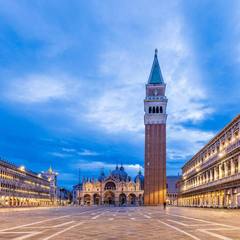 Piazza San MarcoThe only square in Venice called a piazza, ringed by arcades and opening onto the lagoon.
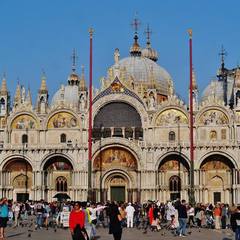 St Mark’s BasilicaBuilt for the relics of Saint Mark, covered inside with golden mosaics.
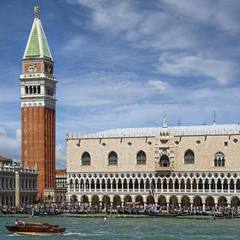 Doge’s PalaceThe pink and white Gothic palace from which the doges ruled the Republic of Venice.
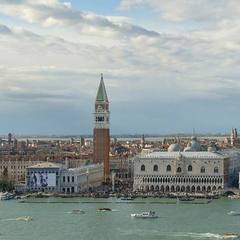 Campanile di San MarcoThe bell tower of St Mark’s, which fell down in 1902 and was rebuilt “where it was, as it was”.
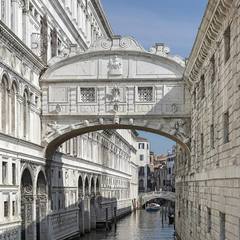 Bridge of SighsThe covered stone bridge between the Doge’s Palace and the prisons, built in 1600.
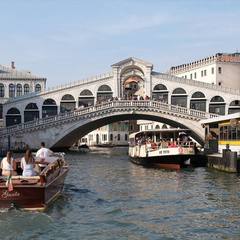 Rialto BridgeThe stone bridge of 1591 over the Grand Canal, with shops along its arch.
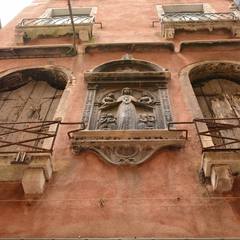 MercerieThe chain of narrow shopping lanes from St Mark’s to the Rialto, the race route in the game.
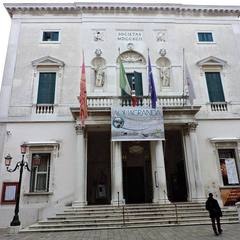 La FeniceVenice’s opera house, which has risen from its ashes more than once, as its name promises.
Also part of Venice
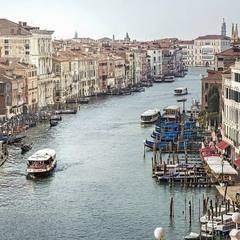 Grand CanalThe great S-shaped waterway through the middle of Venice, lined with palaces.
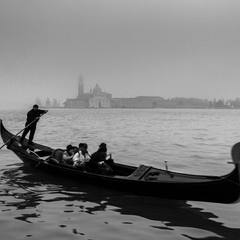 GondolaThe long black boat of Venice, rowed standing up with a single oar.
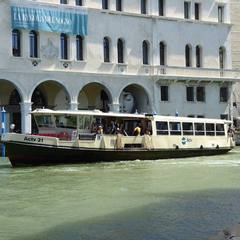 VaporettoThe water bus of Venice, chugging up and down the Grand Canal from stop to stop.
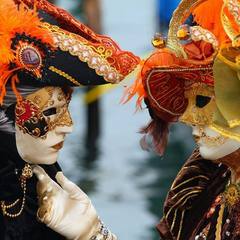 CarnivalTwo weeks of masks and costumes before Lent, filling the squares of Venice.
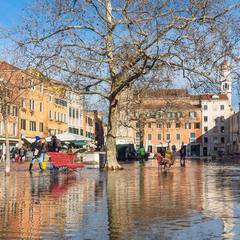 Acqua altaThe high tides that flood St Mark’s Square, now held back by the MOSE barriers.
Streets, squares and waterways
The places that hold the centre of Venice together. Point at one to find it on the map.

-
1
St Mark’s Square Piazza San Marco square
Venice’s great square, closed by St Mark’s Basilica at one end and lined on three sides by the arcades of the old government offices.
-
2
Piazzetta San Marco square
The smaller square between the Doge’s Palace and the Marciana Library, which opens onto the lagoon between the columns of St Mark and St Theodore.
-
3
The Mercerie Marzarie street
The chain of shopping lanes from the clock tower on St Mark’s Square to the Rialto, the city’s main street since the Middle Ages.
-
4
Campo San Bartolomeo square
The busy little square at the foot of the Rialto Bridge, where Venetians meet under the bronze statue of the playwright Carlo Goldoni.
-
5
Rialto Bridge Ponte di Rialto bridge
The stone bridge of 1591 over the Grand Canal, with two rows of shops on its arch. Until 1854 it was the only bridge across the canal.
-
6
The Grand Canal Canal Grande waterway
Venice’s main street, an S-shaped waterway of almost four kilometres lined with palaces, which only four bridges cross.
-
7
Campo San Polo square
One of the largest squares in Venice, across the Grand Canal from San Marco, where the city once held bullfights and fairs.
-
8
Campo Santo Stefano square
A long square between the Accademia Bridge and San Marco, with a statue of the writer Niccolò Tommaseo in the middle.
-
9
Accademia Bridge Ponte dell’Accademia bridge
The wooden bridge over the Grand Canal to the Accademia galleries. It went up in 1933 as a temporary bridge and was later rebuilt in the same form.
-
10
Campo della Salute square
The steps of Santa Maria della Salute, the domed church that Baldassare Longhena built at the mouth of the Grand Canal after the plague of 1630.
-
11
Bridge of Sighs Ponte dei Sospiri bridge
The closed white stone bridge that took prisoners from the Doge’s Palace to the prisons across the canal.
-
12
Riva degli Schiavoni street
The broad stone quay along the lagoon east of the Doge’s Palace, named after the merchants from Dalmatia who moored their ships here.
-
13
Campo Santa Maria Formosa square
A wide, irregular square in Castello around the church of Santa Maria Formosa, which Mauro Codussi rebuilt from 1492.
-
14
Campo Santi Giovanni e Paolo square
The square before the great Dominican church where 25 doges lie buried, with Verrocchio’s statue of the mercenary captain Bartolomeo Colleoni on horseback.
-
15
Strada Nova street
The widest street of Cannaregio, which the city cut through houses and filled-in canals in the 19th century to open a walking route towards the railway station.