
Amsterdam › Places and landmarks
Places and landmarks in Amsterdam
14 landmarks of Amsterdam, and the streets, squares and waterways around them, each with its story and where to find it.
Photo: Deerpeter, CC BY-SA 4.0, via Wikimedia Commons

Landmarks
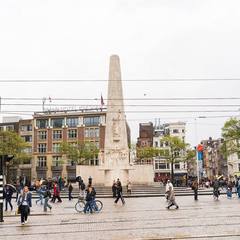 DamThe square on the dam built across the Amstel in the 13th century, which gave the city its name.
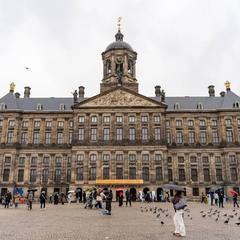 Royal PalaceBuilt as the city hall of the Golden Age, made a palace by Louis Napoleon in 1808.
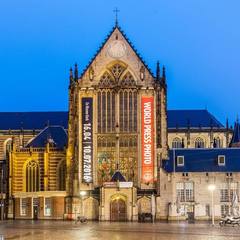 Nieuwe KerkThe church on the Dam where Dutch kings and queens are sworn in.
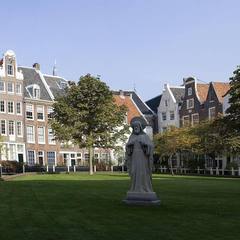 BegijnhofA hidden courtyard of old houses round a garden, behind a door off the Spui.
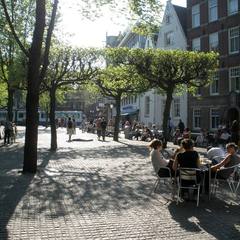 SpuiA small square of bookshops and cafés, with a book market on Fridays.
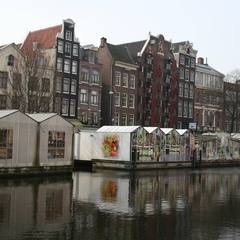 Flower marketThe floating flower market on the Singel, selling bulbs and flowers since 1862.
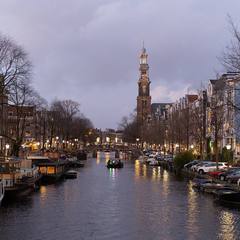 WesterkerkThe church on the Prinsengracht with the tallest tower in Amsterdam, crowned by an imperial crown.
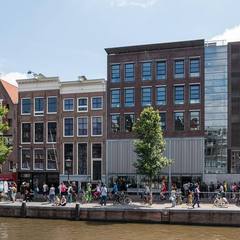 Anne Frank HouseThe canal house where Anne Frank and her family hid from the Nazis and she wrote her diary.
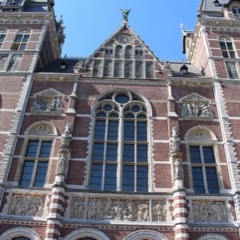 RijksmuseumThe Netherlands’ national museum on the Museumplein, where Rembrandt’s Night Watch hangs and a bike path runs through the building.
Also part of Amsterdam
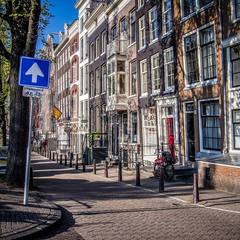 Canal ringThe half-moon of 17th-century canals round the old town, on UNESCO’s World Heritage list.
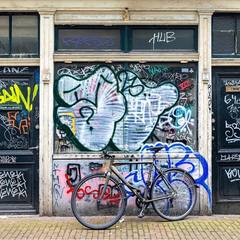 BikesAmsterdam has more bikes than people, and they rule the streets.
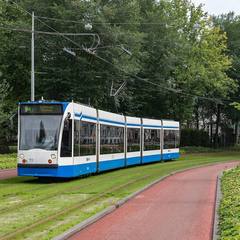 TramsThe blue and white trams of the GVB, ringing their way across the Dam and down the Rokin.
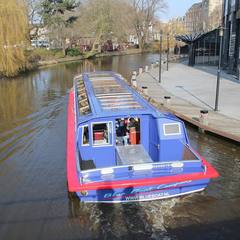 Canal boatsThe long glass-roofed boats that take visitors round the canals and under the low bridges.
 StroopwafelTwo thin waffles with a layer of warm caramel syrup between them.
Streets, squares and waterways
The places that hold the centre of Amsterdam together. Point at one to find it on the map.

-
1
Dam Square Dam square
The square on the site of the first dam in the Amstel, with the Royal Palace, the Nieuwe Kerk and the white National Monument to the war dead.
-
2
Damrak street
The busy street from Centraal Station to the Dam, on the old course of the Amstel, with Berlage’s former stock exchange on one side and a row of crooked houses on the water on the other.
-
3
Rokin street
The wide street south of the Dam, where the Amstel flowed until it was filled in, partly in the 1930s; its last stretch of water still holds a few boats.
-
4
Kalverstraat street
Amsterdam’s busiest shopping street, a narrow pedestrian lane from the Dam to the Munt, named after the calf market held here in the Middle Ages.
-
5
Spui square
A square of bookshops and cafés, with a book market on Fridays and the hidden gate to the Begijnhof.
-
6
Muntplein square
The square around the Munttoren, a tower of the medieval city wall where the city minted coins in 1672 and 1673.
-
7
Singel waterway
The innermost canal of the ring, the city’s moat until the 16th century, with the floating flower market at its southern end.
-
8
Herengracht waterway
The first of the three main canals, named after the gentlemen who governed the city, with the grandest houses on its Golden Bend.
-
9
Keizersgracht waterway
The widest of the canals, named after the Holy Roman Emperor Maximilian I.
-
10
Prinsengracht waterway
The outer canal of the three, lined with houseboats, where Anne Frank hid at number 263.
-
11
Westermarkt square
The square below the Westerkerk, the tallest church tower in the city, with the Homomonument by the water.
-
12
Oudezijds Voorburgwal waterway
One of the oldest canals, past the Oude Kerk through the heart of the Red Light District, De Wallen.
-
13
Nieuwmarkt square
A lively square around the Waag, a 15th-century city gate that later became a weigh house, on the edge of Chinatown.
-
14
The Amstel Amstel waterway
The river that gave Amsterdam its name, flowing in from the south past the Stopera and the Skinny Bridge.